Honkai: Star Rail’s main narrative has always followed a peculiar rhythm—like a kindly grandparent who starts every story with a lullaby, only to reveal halfway through that it’s actually a war ballad. When the Astral Express first docked at the Xianzhou Luofu, players expected a diplomatic pit stop. What they got instead was a labyrinth of immortal politics, body-swapping villains, and a bionic dog whose sense of smell could probably detect a lie three star systems away. The Luofu arc, which fully bloomed a few years ago and remains a fan-favorite museum piece in 2026, is remembered not just for its epic boss fights, but for how it treated the Trailblazer like a bewildered tourist in a city where even the architecture has trust issues.
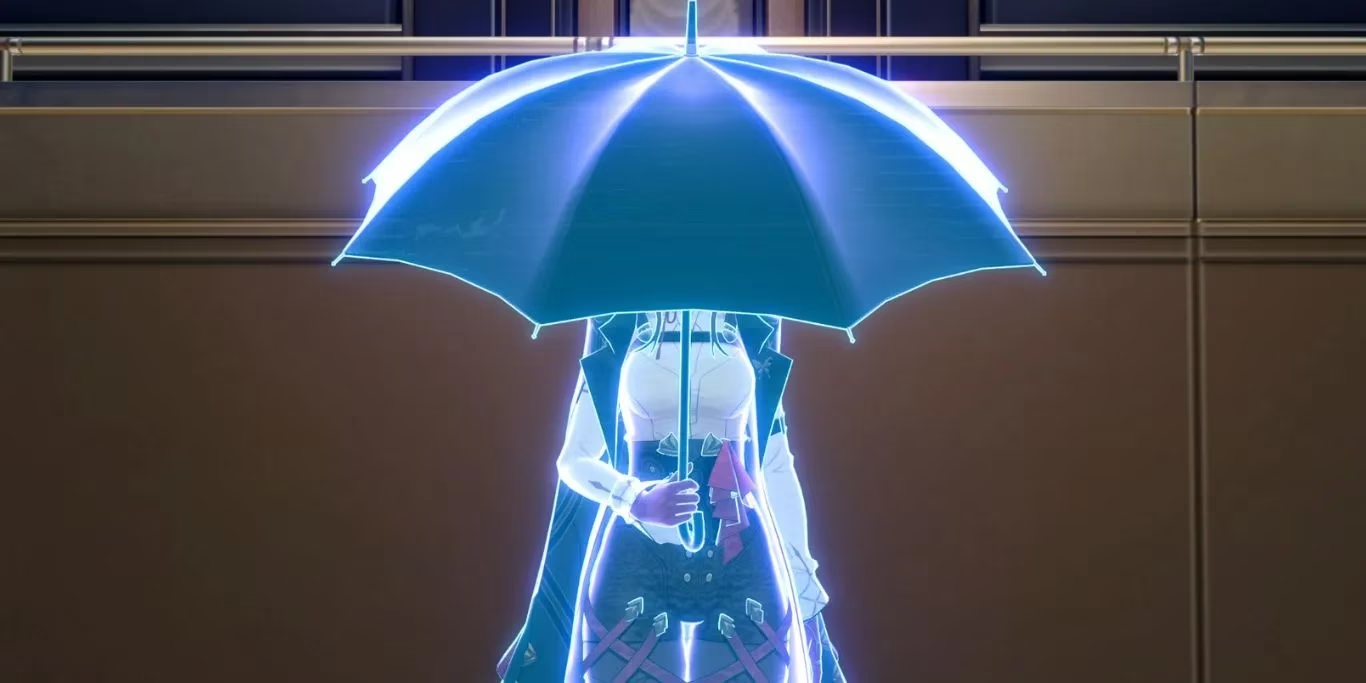
The story’s pivot from Jarilo-VI’s frozen rebellion to the Luofu’s silk-draped conspiracy felt like switching from a gritty survival documentary to a period drama directed by a time-traveling trickster. No sooner had the crew settled into a routine than Kafka materialized on the Express—her presence so incongruously casual it was as if a fox had sauntered into a henhouse and started handing out brochures. She spoke of a Stellaron Burst, a warp jump away, and the Xianzhou Luofu. The decision to go there was less a vote and more a collective shrug toward fate. One does not simply ignore Elio’s script; it’s like being handed a treasure map drawn in disappearing ink and deciding to follow it anyway just to see what happens.
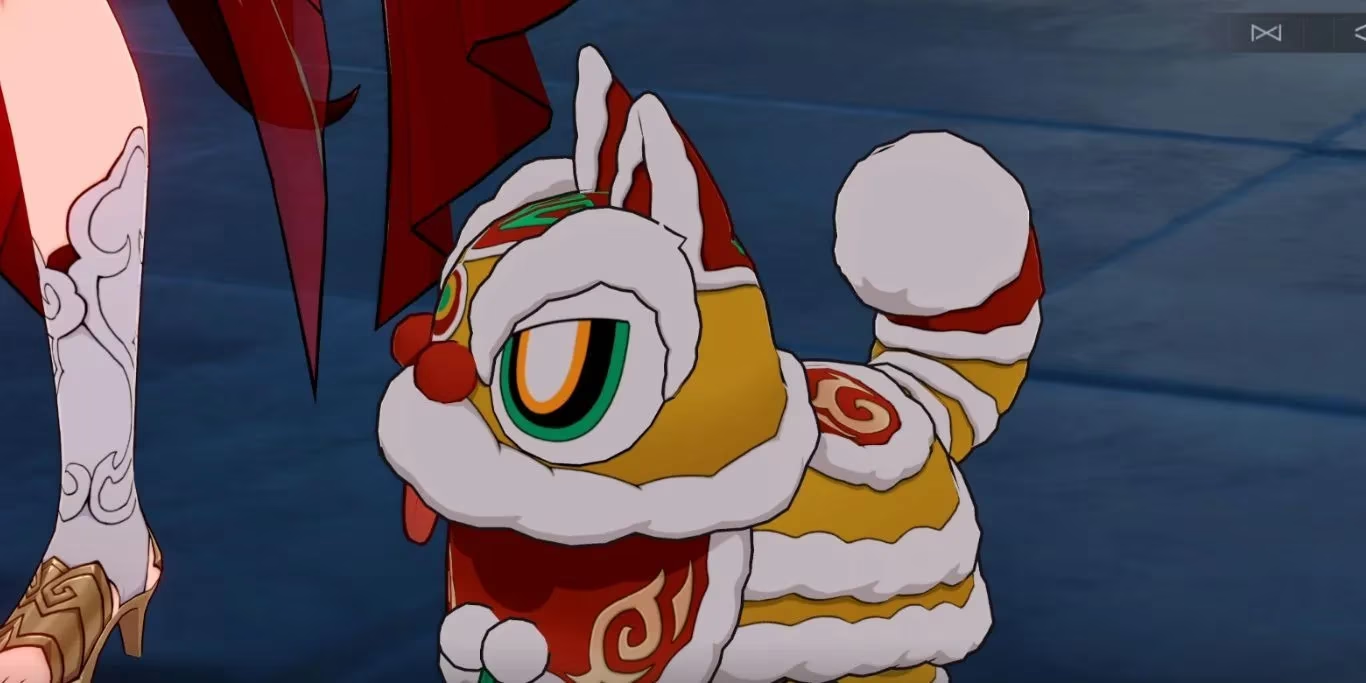
Upon arrival, the Trailblazers quickly discovered that the Luofu’s welcome mat was soaked in chaos. Soldiers lay unconscious, Mara-struck husks wandered about, and the only helpful local was Tingyun, an Amicassador whose smile was as polished as her probable ulterior motives. She led the crew to Madam Yukong, a woman so allergic to outside help that she practically radiated ‘no soliciting’ vibes. But when General Jing Yuan’s hologram sauntered into the conversation like a chess master who’s already moved five pieces ahead, the real game began: capture the Stellaron Hunter Kafka. It was the universe’s most stressful fetch quest, and the bionic dog Diting was the star—a creature whose sensory abilities turned the hunt into a spectacle, like searching for a needle in a haystack by using a metal detector that also judged your life choices.
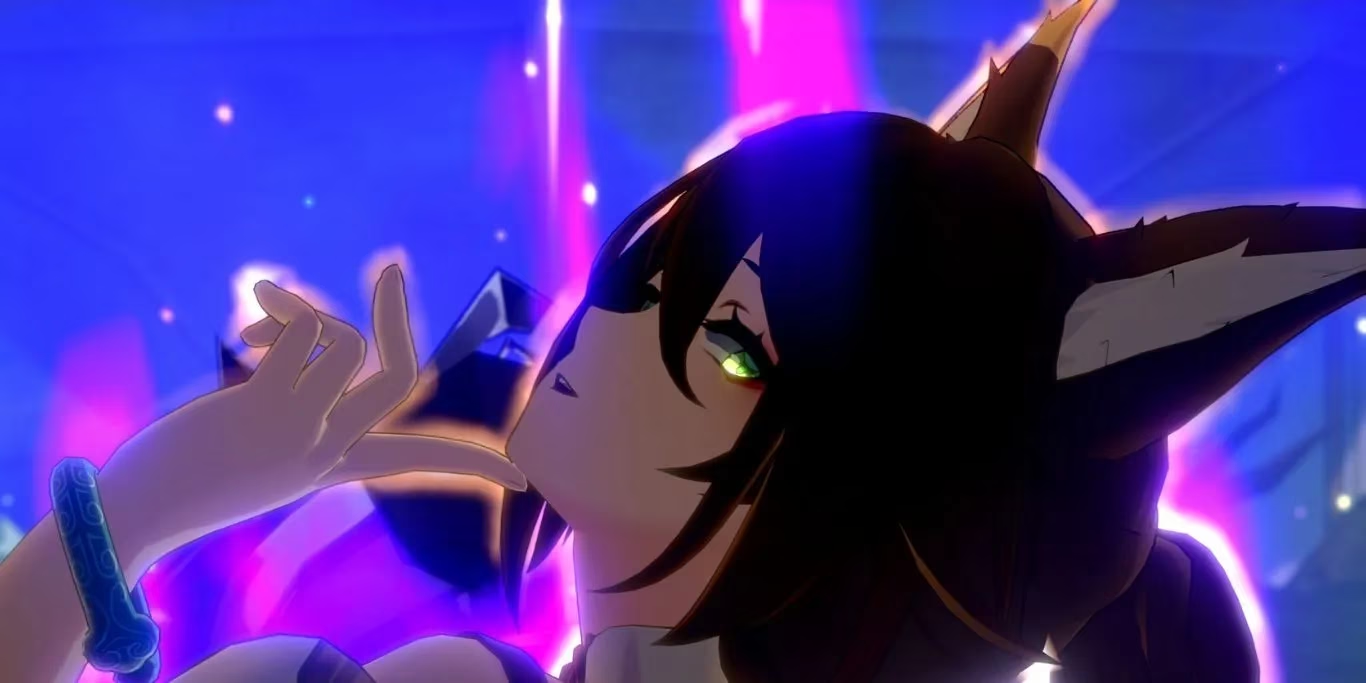
The hunt for Kafka peeled back layers like an onion that had been pickled in dramatic irony. She left clues deliberately, leading the Express crew by the nose until a final showdown that felt more like a philosophical seminar with gunfire. Here, Kafka dropped the first of many bombshells: the Stellaron Hunters were merely “Destiny’s Slaves,” enslaved to Elio’s foresight. The reveal that the whole capture was choreographed so the Trailblazer could later stand against Nanook, the Aeon of Destruction, was the narrative equivalent of discovering your whole life has been a rehearsal for a play you didn’t audition for. The story’s habit of turning cosmic threats into stepping stones made every quiet moment feel like the pause between a punchline and a punch.
The true puppeteer, however, was the Disciples of Sanctus Medicus, led by Dan Shu—a blind alchemist with a grudge longer than the Luofu’s history. Under the guise of humanitarian aid, she brewed elixirs that transformed normal citizens into Mara-struck berserkers. This subplot, originally part of the main questline before being demoted to a side mission, still functions as the arc’s crooked spine. Watching the Trailblazer infiltrate the cult was like watching a toddler wander into a philosophy lecture and somehow dismantle the professor’s entire worldview by accident.
The rug-pull of the entire chapter arrived when Tingyun casually snapped her own neck and morphed into Phantylia, a Lord Ravager of Destruction. The betrayal hit with the gentleness of a thunderclap in a library. For hours, players had trusted Tingyun as the helpful guide; she was the one who handed out quests and made small talk. To learn she had been a cosmic arsonist wearing a Foxian skinsuit was a masterstroke of HoYoverse’s narrative sadism. Welt’s later reassurance that the real Tingyun might still be alive felt like being told your favourite mug didn’t shatter—it just temporarily became a fire demon.
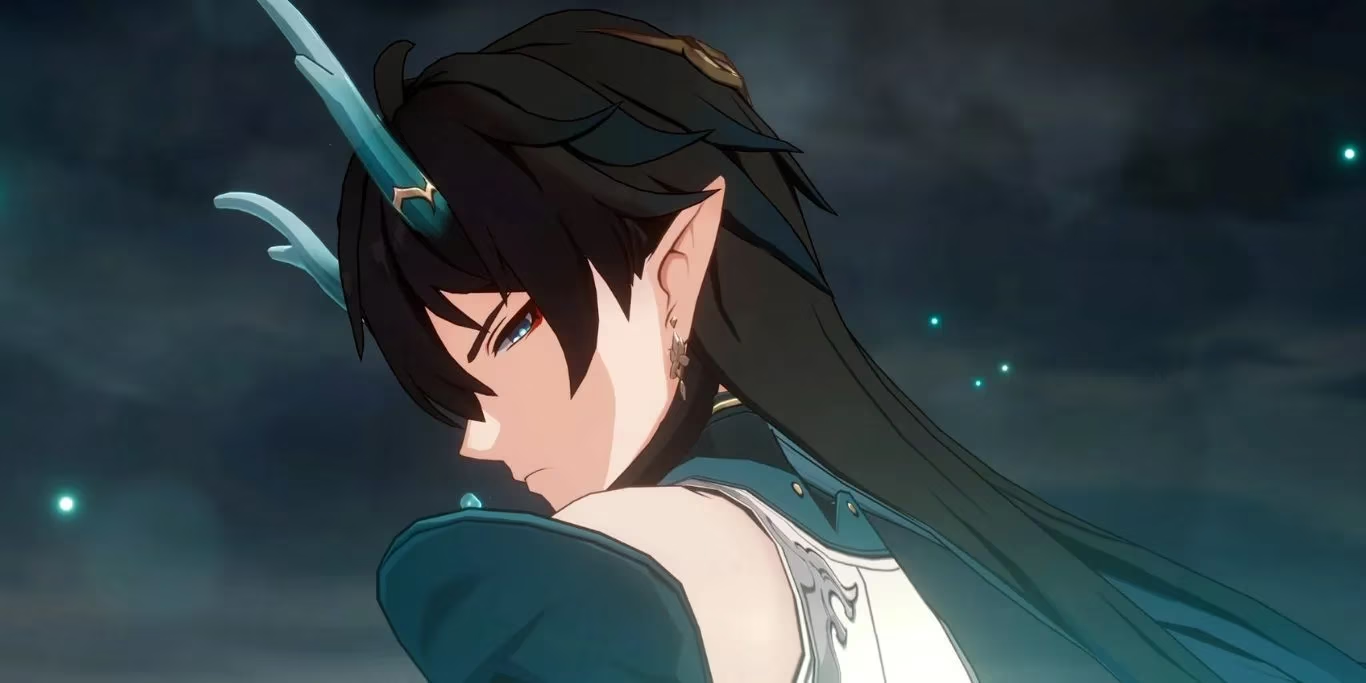
Parallel to this chaos ran Dan Heng’s personal drama, which had been bubbling under the surface like a geyser waiting to embarrass its owner. Cornered by Blade, stabbed in a cinematic confrontation, Dan Heng shed his quiet archivist persona and transformed into Imbibitor Lunae—a high elder whose very presence rearranged the waters of Scalegorge Waterscape. The history between him and the Xianzhou, tangled in the sins of his previous incarnation Dan Feng, added a deliciously tragic flavour. Jing Yuan’s plea for him to prove he was not the same sinner felt like an ex-lover asking for one last dance, except the dance involved splitting the sea.
The final confrontation with Phantylia beneath the Ambrosial Arbor was a three-phase opera of destruction. The tree itself—a once-sacred symbol now grotesquely overgrown—resembled a broccoli floret that had absorbed a nuclear reactor. Phantylia attempted to convert Jing Yuan into the Antimatter Legion, but the general’s plan was as audacious as it was suicidal: he let Dan Heng stab him to disrupt the transformation. It was the most violent trust fall in galactic history, and it worked. The victory was bittersweet; Phantylia’s parting words hinted that the Luofu’s troubles were far from over, and the interlude left the door ajar like a horror movie that refuses to accept its own ending.
And just when players thought they could exhale, the narrative looped back with a ghost hunt. A message from Guinaifen about spectral sightings led the Trailblazer into Fyxestroll Garden, where Heliobi—dangerous spirits born from escaped furnace fragments—had turned the place into a haunted funhouse. The introduction of Huohuo, a terrified Foxian with a resident Heliobus named Mr. Tail, added a new shade of frantic energy. The Heliobi mythology expanded: they fed on emotions, squabbled among themselves, and occasionally possessed people just to feel alive. The showdown with Cirrus, a manipulative Heliobus who tried to hijack the illusion of a legendary battle, proved that even energy beings can hold grudges with the intensity of a scorned drama club president.
Like the best of Hoyoverse’s epics, the Luofu arc was never just about defeating a boss. It was about walking through a parade of half-truths, watching companions transform both literally and metaphorically, and learning that even Aeons can fall. By the time the Astral Express departed, the Trailblazer had gained the power of The Hunt, a knack for unpredictable alliances, and the sobering knowledge that the universe’s most dangerous threats often arrive wearing a helpful smile. For players revisiting this saga in 2026, the Luofu remains an exquisite narrative knot: tangled, colourful, and impossible to undo without a few snags.