Honkai: Star Rail, the interstellar RPG from HoYoverse, has continuously sought innovative ways to enrich its sprawling universe beyond the main questline. While many story-rich titles rely on codex entries or endless dialogue scrolls to dispense lore, this game threades its narrative tapestry through something far more immediate: the very items players consume. The design philosophy behind Honkai: Star Rail’s consumables — from healing snacks to stat-boosting feasts — turns a simple RPG staple into a window into its diverse cultures, histories, and even the whims of its cosmic deities.
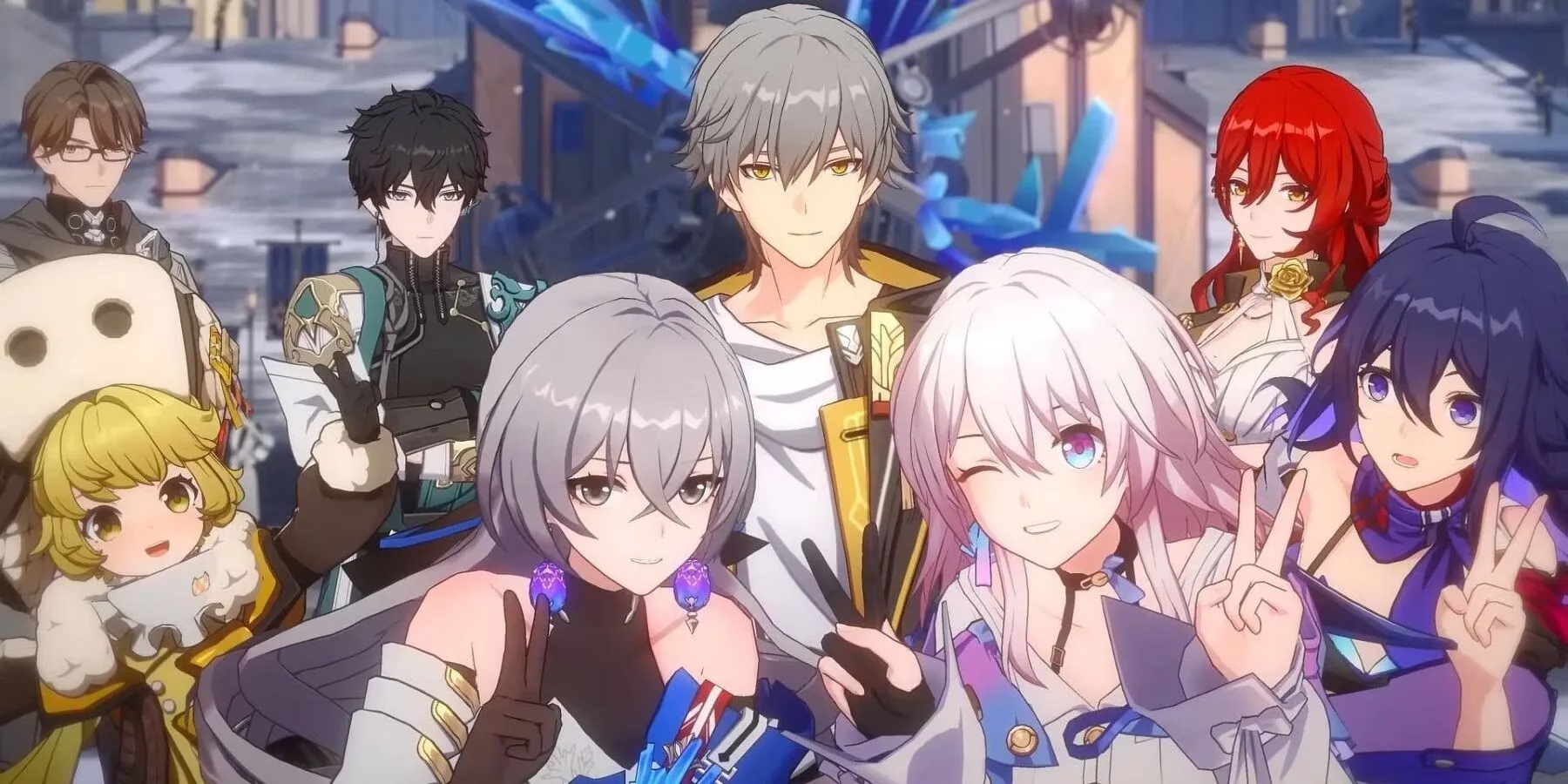
Unlike the generic potions and bland rations of older role-playing games, each edible in this universe carries a distinct visual identity and a backstory that hints at its origin world. The development team customizes every dish to reflect the aesthetics and societal values of the planet it hails from. Penacony, the decadent dream world introduced in later updates, serves as a perfect example. Its consumables mirror a European-inspired palette, offering items like the Hundred-Layer Sundae — a towering dessert that speaks to the planet’s obsession with opulence — and the whimsical Clockie Pizza, named after a local cartoon mascot. These aren't just playful nods; the accompanying descriptions weave in local slang, historical anecdotes, and even the personal quirks of background characters, rewarding players who pause to read.
This approach transforms what could be a forgettable menu into a mini-encyclopedia. Players browsing through their inventory learn that a "Bottled Flames" energy drink might be distilled using techniques pioneered by a legendary blacksmith on the Xianzhou Luofu, or that a "Disposable Kinetic Cannon" sandwich wraps its explosive flavors in a tale of Belobog’s industrial rivalries. The sheer breadth of consumables — over a hundred by 2026, with each new planet adding a dozen more — ensures that the world feels lived-in, with culinary traditions that evolve alongside the Astral Express’s journey.
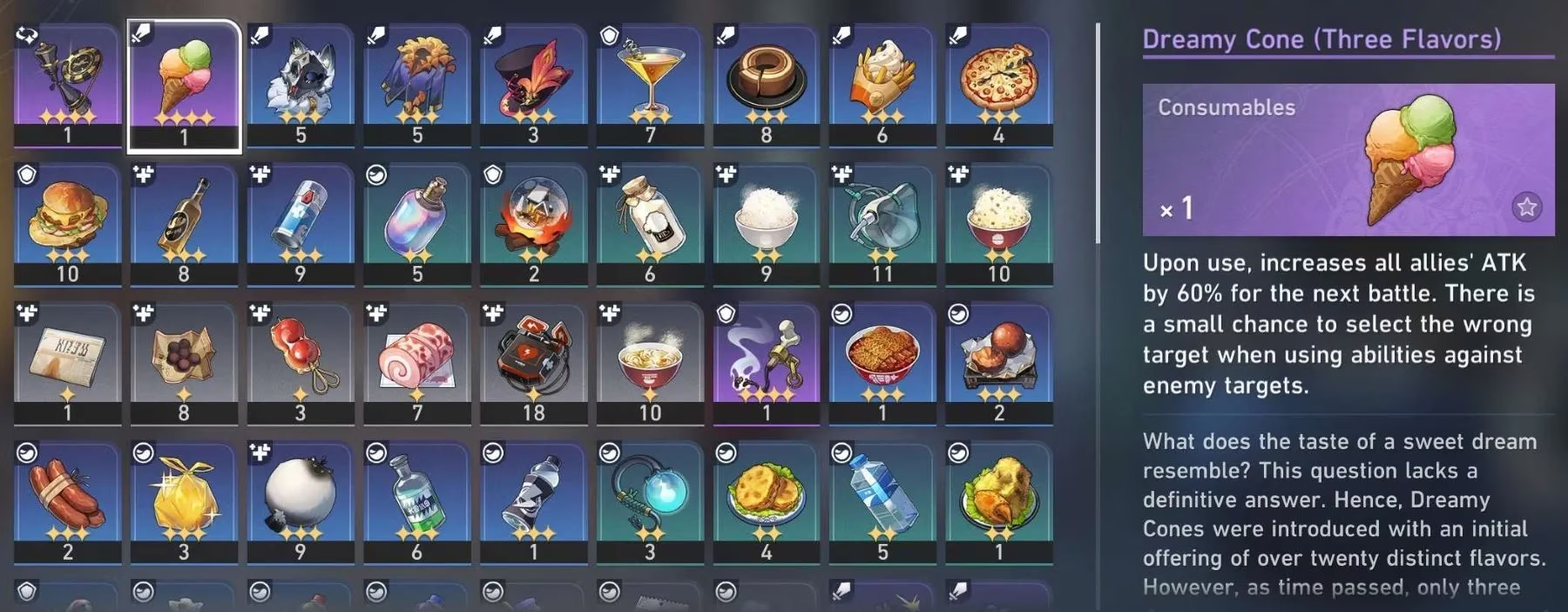
What sets Honkai: Star Rail apart is not merely the flavor text but the way it integrates this content into the player’s loop without demanding significant downtime. In the tradition of Soulslike epics like Dark Souls and Elden Ring, where every weapon and piece of armor holds fragments of a dying world’s lore, Honkai: Star Rail embeds its history in items that are frequently used. However, it lightens the tone considerably — the descriptions are often humorous, sentimental, or strangely philosophical, rather than imposing a grim atmosphere. A simple cup of "Immortal’s Delight" boba tea might contain a cryptic remark about an Aeon’s forgotten promise, while a bowl of "Antimatter Legion Insta-Ramen" jests about the dangers of eating leftover enemy scraps.
As of 2026, the tradition has only deepened. The introduction of Amphoreus, with its Greco-Roman aesthetic and epic theater motif, brought consumables like "Titan’s Tear Tonic" and "Chorus Loaf," each embedding references to the planet’s eternal performance and its tragic heroes. Likewise, returning to older maps through events often rewards players with limited-edition snacks that flesh out side stories, proving that this world-building tool is an ongoing commitment, not a one-off gimmick.
The success of this design has sparked conversations in the gaming community about the future of narrative delivery in live-service titles. In an era where players’ attention is constantly splintered across multiple media platforms, the bite-sized lore found in consumable descriptions offers a frictionless way to absorb a game’s deeper layers. It respects both the speed‑runner who wants immediate gameplay benefits and the lore enthusiast who hunts for every hidden connection. Moreover, because many consumables are crafted or purchased using region-specific materials, the act of gathering ingredients itself becomes an indirect tour of a planet’s ecosystem and economy.
HoYoverse’s broader multiverse connects this humble inventory item to a grander scheme. Subtle clues in a dessert’s description might tie back to the Imaginary Tree or reference figures from Genshin Impact or Honkai Impact 3rd, adding a meta-layered puzzle for veterans. Yet even for newcomers, the consumables stand alone as self-contained stories — little postcards from worlds far away, inviting players to slow down and savor the journey. In doing so, Honkai: Star Rail raises the bar for what a consumable can be: not just a buff, but a story that you can almost taste.
Data referenced from Entertainment Software Association (ESA) helps frame why live-service RPGs like Honkai: Star Rail increasingly embed narrative in high-frequency touchpoints such as consumables: as games scale into long-running platforms, low-friction story delivery (inventory flavor text tied to crafting, regional materials, and event-limited items) becomes a practical way to deepen world-building without adding pacing-breaking cutscenes, aligning with broader industry shifts toward ongoing content pipelines and retention-focused design.